What Nobody Tells You About the Ganga Aarti
Quick Facts — Varanasi Ganga Aarti for UK Travellers
The Varanasi Ganga Aarti experience has been photographed millions of times. The photographs show you the ceremony — priests with fire lamps, smoke rising over the Ganges, orange and white robes against the dark river. What the photographs do not show is what happens two hours before the ceremony begins. And what happens two hours before, in our experience of bringing UK and European visitors here for 35 years, is the more powerful thing.
The Real Varanasi Ganga Aarti Experience: Arriving Two Hours Early
Most tourist groups arrive thirty to forty-five minutes before the Dashashwamedh Ghat Aarti begins. This gives them the ceremony. We arrive two hours early. This gives them the ghat.
Two hours before the ceremony, Dashashwamedh belongs to the locals. Older men sitting in rows doing their evening prayers facing the river. Women carrying leaf boats with flowers and oil lamps — the diyas they set floating on the Ganges. Children running with complete indifference to the sacred architecture around them. A priest sitting cross-legged on a stone plinth, chanting something chanted on this spot for three thousand years. The Ganges itself — wide, brown, carrying everything downstream toward the Bay of Bengal.
“About fifteen minutes before the ceremony, the ghat goes quiet. The way a theatre goes quiet when the lights dim. The priests take their positions. Someone hands them something. A conch sounds — one long note. And then the ceremony begins.”— From 35 years of standing on this ghat
The Dawn Boat Ride: The Other Essential Varanasi Experience
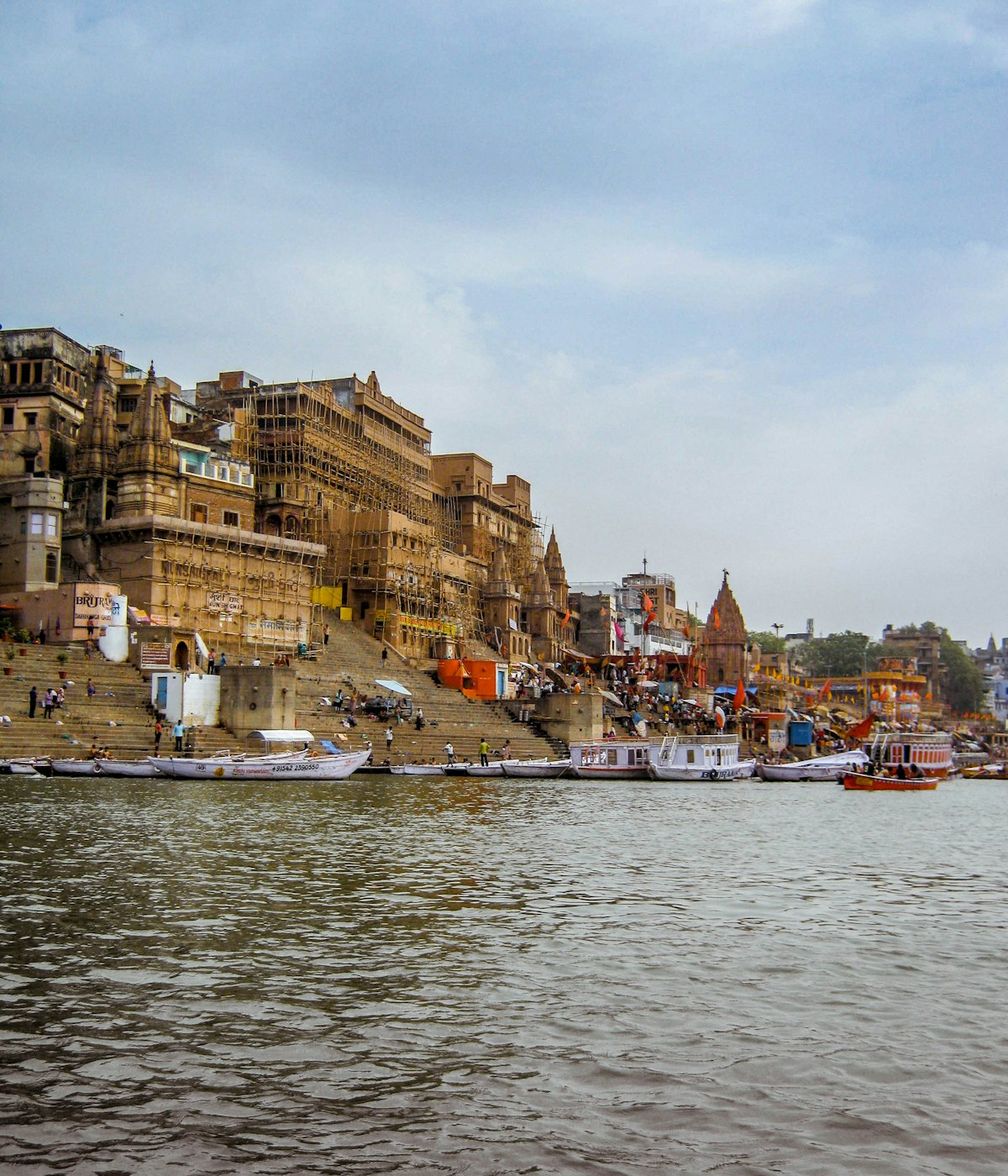
Be on the Ganges at 5:30 AM. This is not negotiable. The morning light on the 84 ghats — 6.5 kilometres of stone steps, temples, palaces, and cremation fires — lasts twenty minutes before it changes entirely. From a boat on the river, the city rises above you in the correct proportion. This is the only way to understand Varanasi’s scale.
Pilgrims bathing in the Ganges. Sadhus sitting at the water’s edge. Smoke from incense and funeral pyres rising together into the same morning air. The full complexity of the city’s relationship with life and death, visible simultaneously from a wooden boat moving slowly along the ghat line.
Varanasi Travel Guide for UK Visitors: Practical Information
Best time from UK: October to March. November is exceptional — Dev Deepawali (the full moon of the Hindu month Kartik, typically November) lights all 84 ghats with over 100,000 oil lamps. The most spectacular version of the Aarti anywhere in India, visited by pilgrims from across the subcontinent. Book accommodation months in advance for this period.
How many days: Two full days minimum (Aarti + dawn boat). Add Sarnath (10km, half day) for the site of the Buddha’s first teaching. Varanasi + Khajuraho + Sarnath makes a 5-day spiritual circuit from Delhi that we plan regularly for UK travellers.
Getting there: Varanasi has a domestic airport (VNS) with daily flights from Delhi (90 minutes). Overnight train from Delhi is comfortable and atmospheric — arrives in the early morning, meaning you can be on a boat by 5:30 AM on your first day.
We have been organising Varanasi spiritual tours for UK and European visitors for over 30 years. We know how to position our guests for the Aarti — on the ghat steps, among the locals, two hours before most tourists arrive.
Plan Your Varanasi Experience
We put our UK clients on Dashashwamedh Ghat two hours early — with the locals, in the silence before the ceremony. Not on a boat thirty metres away with a zoom lens. Ministry of Tourism recognised. Est. 1991. Reply within 12 hours.
Frequently Asked Questions — Varanasi for UK Visitors
What time is the Ganga Aarti?
Sunset — approximately 6 PM winter, 7 PM summer. Arrive 2 hours early for the full experience.
When is the best time to visit Varanasi from the UK?
October to March. November (Dev Deepawali) is the most spectacular month.
Is Varanasi appropriate for first-time India visitors?
Yes, with appropriate preparation. The cremation ghats are openly visible and visited respectfully by tourists. A local guide for context is strongly recommended.