
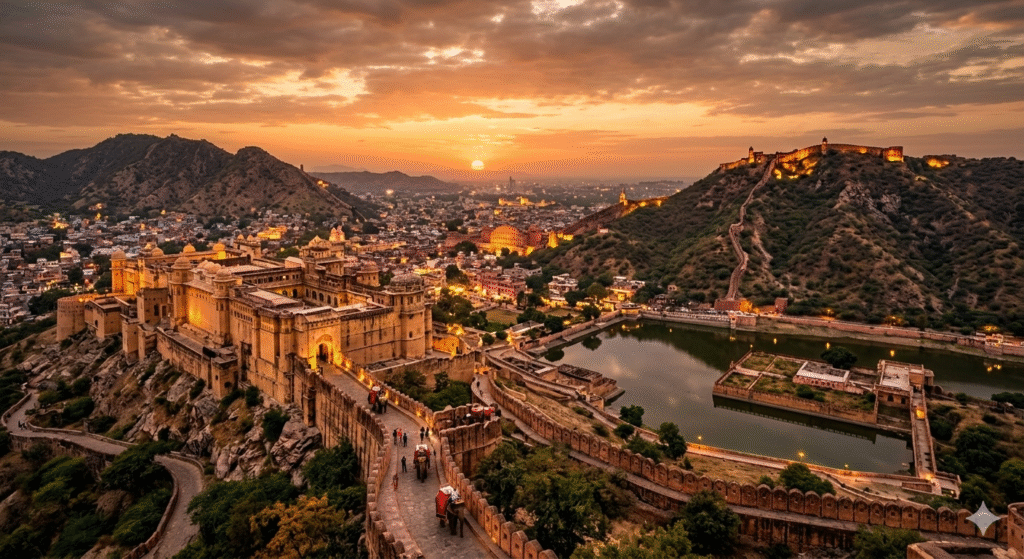
Planning a Rajasthan trip from the UK in 2026? Discover the best time to visit Rajasthan from the UK, month-by-month weather, festivals, flights, visa tips, and expert travel advice. Start planning today!
Rajasthan has been calling travellers from across the world for centuries — and if you are sitting in the UK right now, dreaming of golden sand dunes, majestic forts, vibrant bazaars, and royal palace hotels, you are in exactly the right place.
But here is the truth that every smart traveller from the UK knows: when you visit Rajasthan matters just as much as where you go. The right timing can turn a good holiday into the trip of a lifetime.
This complete 2026 guide breaks down everything — weather, festivals, flights from the UK, visa requirements, city-by-city timing, and budget tips — so you can plan your perfect Rajasthan journey with total confidence.
Why Rajasthan Is the UK's Most Loved Indian Destination
Rajasthan is India’s largest state and its most colourful. It is home to the iconic Pink City of Jaipur, the Blue City of Jodhpur, the Golden City of Jaisalmer, and the Lake City of Udaipur. Every city tells a different story.
For UK travellers, Rajasthan offers something that feels both exotic and deeply accessible. Non-stop flights from London reach Jaipur (via Delhi) in under 10 hours. English is widely spoken across the state. And the hospitality is legendary — this is a land where guests are still treated like royalty.
According to India’s Ministry of Tourism, Rajasthan consistently ranks as one of the top three most visited Indian states by international tourists. UK visitors form one of the largest groups of foreign arrivals. It is not hard to understand why.
Whether you are planning your first trip to India or returning for another Rajasthan adventure, timing your visit correctly is the single most important decision you will make.
Quick Answer: The Best Time to Visit Rajasthan from the UK
October to March is the best time to visit Rajasthan from the UK, with November to February being the absolute sweet spot.
During these months, temperatures stay between 10°C and 27°C — cool, dry, and perfectly comfortable for exploring forts, riding camels through the desert, attending festivals, and going on wildlife safaris. This is the season when Rajasthan truly comes alive.
Here is a quick snapshot before we dive deeper:
| Month | Temperature | Crowd Level | Best For |
|---|---|---|---|
| October | 20–33°C | Moderate | Post-monsoon freshness, wildlife |
| November | 15–28°C | High | Pushkar Camel Fair, sightseeing |
| December | 10–22°C | Very High | All experiences, festivals |
| January | 8–20°C | Very High | Desert Festival, Jaipur Lit Fest |
| February | 12–25°C | High | Romantic travel, desert safaris |
| March | 15–30°C | Moderate | Early warmth, tiger safaris |
| April–June | 35–48°C | Low | Avoid (extreme heat) |
| July–September | 25–35°C | Low | Monsoon charm, budget travel |
Month-by-Month Guide: Rajasthan Weather for UK Travellers
October — The Hidden Gem Month
October is when Rajasthan quietly shakes off the monsoon and steps into its glory. The landscape turns surprisingly green, temperatures drop to a comfortable 20–33°C, and the crowds have not yet arrived in full force.
This is a brilliant month for UK travellers who want authentic experiences without fighting the peak-season rush. Wildlife enthusiasts will love October in Ranthambore National Park — the forest is lush, birdlife is extraordinary, and tiger sightings become more frequent as the dry season approaches.
The Rajasthan International Folk Festival in Jodhpur’s magnificent Mehrangarh Fort takes place every October. It is one of the world’s most celebrated world music festivals, held in one of India’s most dramatic settings. If you can time your UK trip to catch this festival, it is an experience you will talk about for years.
Best places to visit in October: Jodhpur, Ranthambore, Jaipur, Pushkar
November — Peak Season Begins
November is when Rajasthan truly hits its stride. Temperatures settle between 15°C and 28°C — warm enough to enjoy the outdoors all day, cool enough for comfortable evening walks through ancient bazaars.
The single biggest event in Rajasthan’s calendar happens in November:
The Pushkar Camel Fair. This is one of the world’s most spectacular cultural gatherings. Over 50,000 camels, horses, and cattle gather at the sacred town of Pushkar, along with traders, pilgrims, acrobats, and folk performers. For UK travellers who want a truly immersive Indian experience, this is unmissable.
Diwali — India’s Festival of Lights — also frequently falls in October or November. Witnessing Diwali in Rajasthan, where palaces and forts are illuminated in gold, is a deeply moving experience that simply cannot be replicated elsewhere.
Best places to visit in November: Pushkar, Jaipur, Jodhpur, Udaipur, Jaisalmer
December — The Most Popular Month for UK Visitors
December is peak season in Rajasthan, and for very good reason. The weather is perfect — days are warm and sunny at 18–22°C, and evenings dip to a crisp 10–12°C that feels refreshing rather than cold.
Many UK travellers choose December for their Rajasthan trip specifically because it aligns with the Christmas and New Year holiday period. Spending New Year’s Eve in a rooftop restaurant overlooking Udaipur’s Lake Pichola, or watching fireworks from a Jaipur palace hotel, is an unforgettable alternative to a typical British winter.
One important note for UK travellers: December is the busiest month across all of Rajasthan. Book your hotels, palace accommodations, and desert safaris at least three to four months in advance. The best heritage properties and luxury tents in Jaisalmer sell out completely.
Best places to visit in December: Udaipur, Jaipur, Jaisalmer, Jodhpur, Bikaner
January — Festival Month at Its Best
January is many travel experts’ favourite month to visit Rajasthan. The weather remains gloriously cool — temperatures hover between 8°C and 20°C — and the festival calendar is packed with world-class events.
The Jaipur Literature Festival in late January is the world’s largest free literary festival, attracting authors, thinkers, and artists from across the globe. For UK visitors who love books, ideas, and culture, this alone is worth planning a trip around.
The Desert Festival in Jaisalmer (usually held in January or February) is another highlight. Set against the magnificent Sam Sand Dunes, it features camel races, folk music, turban-tying competitions, and traditional dance performances under vast starlit desert skies.
Bikaner holds its celebrated Camel Festival in January, showcasing extraordinary camel beauty pageants, acrobatics, and traditional crafts.
One practical note: January mornings in Jaisalmer and the deeper desert regions can be genuinely cold, with temperatures occasionally dropping near 2–5°C at night. Pack a warm layer alongside your summer clothes.
Best places to visit in January: Jaipur, Jaisalmer, Bikaner, Udaipur
February — Romantic Rajasthan
February is an excellent month for couples and honeymooners travelling from the UK. The weather warms slightly — pleasant days of 20–27°C with mild evenings — and the festival season continues at full swing.
The Jaipur Literature Festival often extends into early February. The Desert Festival in Jaisalmer typically wraps up in February. And across the state, the streets and temples burst into colour for Holi (usually late February or early March), one of India’s most joyful and photogenic festivals.
Udaipur in February is particularly special. The romantic City of Lakes, with its shimmering Lake Pichola, ornate City Palace, and rooftop restaurants playing live classical music, reaches a kind of perfection during these weeks. Many UK travellers describe Udaipur in February as the most romantic place they have ever visited.
Wildlife safaris in Ranthambore reach peak quality in February and March, as animals increasingly gather around water sources. Tiger sightings become more frequent and more reliable.
Best places to visit in February: Udaipur, Jaisalmer, Jaipur, Ranthambore
March — The Last Month of Perfect Weather
March is the final month of truly comfortable Rajasthan travel. Temperatures climb to 25–33°C, which remains manageable for sightseeing, particularly in the mornings and evenings. Holi — the Festival of Colours — transforms every city in Rajasthan into an explosion of vivid dyes, music, and celebration. Experiencing Holi in Jaipur or Udaipur is a bucket-list moment that delivers once-in-a-lifetime photographs and memories.
From a wildlife perspective, March is actually one of the best months for tiger spotting in Ranthambore. The heat increases, water sources dry up, and tigers make themselves visible more frequently. If a tiger safari is your priority, March is worth considering despite the rising temperatures.
UK visitors who book in March often find significantly better availability at hotels and slightly lower prices compared to the December–January peak.
Best places to visit in March: Jaipur (for Holi), Ranthambore, Udaipur, Jodhpur
April to June — Summer (Approach with Care)
Summer in Rajasthan is extreme. Temperatures regularly exceed 45°C in desert cities like Jaisalmer, Jodhpur, and Bikaner. For most UK travellers, these conditions make comfortable sightseeing very difficult.
However, if you must travel during this period — perhaps because of school holiday restrictions — two exceptions exist:
Mount Abu, Rajasthan’s only hill station, stays significantly cooler at around 22–32°C. Its Summer Festival in May/June offers cultural performances and pleasant mountain air.
Kumbhalgarh, set at elevation in the Aravalli Hills, also remains cooler than the plains and allows exploration of its magnificent fort with far fewer crowds than in winter.
Budget-conscious UK travellers who can tolerate the heat will find hotel rates dramatically reduced and popular sites far less crowded during these months.
July to September — Monsoon Magic
Monsoon season is Rajasthan’s best-kept secret. Rainfall in this desert state is far lighter than in most of India — particularly in the western Thar Desert region — making it far more manageable than travellers expect.
Rain transforms the landscape. Arid plains turn green. Ancient stepwells fill with water. The Aravalli Hills become verdant and atmospheric. Udaipur’s lakes swell to their most beautiful.
For UK families whose travel dates are fixed by school holidays, the August–early September window can work well. Jaipur, Udaipur, and Jaisalmer remain accessible and beautiful. Wildlife parks like Ranthambore close during peak monsoon months (July to September), so plan accordingly.
The Teej Festival in Jaipur — a vibrant celebration of the monsoon season featuring colourful processions, traditional dress, and folk music — takes place in July or August and offers a distinctly local experience.
Hotel prices drop significantly in the monsoon months, making this the ideal time for budget-conscious UK travellers who want to experience Rajasthan’s culture without the peak-season costs.
Season-by-Season Summary for UK Travellers
Winter Season (October to March) — BEST TIME
- Temperature: 8°C to 30°C
- Ideal for: All sightseeing, desert safaris, wildlife, festivals, photography
- Crowd level: High to Very High (book well in advance)
- UK comparison: Warmer than a British summer, perfect for outdoor activities all day
Summer Season (April to June) — AVOID if possible
- Temperature: 35°C to 48°C
- Ideal for: Budget travel, Mount Abu, reduced crowds
- Crowd level: Low
- UK comparison: Far hotter than anything experienced in the UK — proper preparation is essential
Monsoon Season (July to September) — HIDDEN GEM
- Temperature: 25°C to 35°C
- Ideal for: Green landscapes, budget travel, cultural festivals, Udaipur
- Crowd level: Low to Moderate
- UK comparison: Similar humidity levels to a warm British summer, with occasional heavy showers
Flying to Rajasthan from the UK: Everything You Need to Know
Which Airports Serve Rajasthan?
Rajasthan’s major international gateway is Jaipur International Airport (JAI), which handles direct connections from Delhi and Mumbai. Most UK travellers fly into Indira Gandhi International Airport, Delhi (DEL) first, which offers the most flight options, and then take an internal connecting flight or comfortable train to Jaipur (approximately 4.5 hours by train).
Udaipur’s Maharana Pratap Airport (UDR) and Jodhpur Airport (JDH) also handle domestic flights from Delhi and Mumbai.
Flight Time and Airlines from the UK
Direct flights from London to Delhi take approximately 8.5 to 9.5 hours. Major airlines operating this route include:
1. British Airways — direct from London Heathrow to Delhi
2. Air India — direct from London Heathrow to Delhi
3. Virgin Atlantic — direct from London Heathrow to Delhi
4. IndiGo, SpiceJet, Air India Express — domestic connections Delhi to Jaipur (1 hour)
A return flight from London to Delhi typically costs £450–£650 during peak season (November to February) and £300–£450 in off-peak months. Booking 10–14 weeks in advance secures the best fares.
Best Way to Get Around Rajasthan
Once in Rajasthan, UK travellers have several excellent options:
By Train: India’s railway network connects all major Rajasthan cities. The Palace on Wheels luxury train runs from Delhi through Jaipur, Sawai Madhopur (Ranthambore), Chittorgarh, Udaipur, Jaisalmer, Jodhpur, and Bharatpur — a rolling five-star hotel experience that many UK travellers describe as one of the highlights of their India journey.
By Private Car with Driver: The most flexible and comfortable option. A private air-conditioned car with an experienced English-speaking driver allows you to travel at your own pace between cities.
By Domestic Flights: IndiGo and Air India Express run quick, affordable flights between Jaipur, Jodhpur, Udaipur, and Jaisalmer.
India eVisa for UK Citizens: Quick 2026 Guide
UK citizens can apply for an India eVisa entirely online before travelling — no embassy visit required. The process is straightforward and takes approximately 72 hours to process.
India eVisa Key Facts for UK Travellers (2026):
1. Apply online at: indianvisaonline.gov.in
2. Cost: Approximately $25 USD for a 30-day Tourist eVisa (April–June: $10 USD)
3. Processing time: 72 hours (apply at least 2 weeks before departure to be safe)
4. Validity: 30 days, 1 year, or 5 years depending on visa type chosen
5. Entry: Double or multiple entry depending on visa selected
6. From October 2025, UK travellers can submit an electronic arrival form online up to 72 hours before travel, eliminating airport paperwork
Documents needed: Valid UK passport (minimum 6 months validity), a recent photograph, return flight details, and accommodation confirmation.
The eVisa process is simple, fast, and completely digital. The days of long embassy queues and paper applications are gone.
Top Festivals in Rajasthan That UK Travellers Love
Rajasthan’s festival calendar is one of the richest in the world. Here are the unmissable events to plan your UK trip around:
1. Pushkar Camel Fair (November) — One of the world’s most extraordinary cultural gatherings. Over 50,000 animals, traditional music, competitions, and the sacred Pushkar Lake.
2. Jaipur Literature Festival (January) — The world’s largest free literary festival. World-class authors, thinkers, musicians, and artists gather in the Pink City for five days of ideas and conversation.
3. Desert Festival, Jaisalmer (January/February) — Folk music, camel races, turban-tying contests, and fire dances against the backdrop of golden sand dunes.
4. Bikaner Camel Festival (January) — Camel beauty pageants, camel acrobatics, and traditional Rajasthani culture in the city of blue pottery.
5. Diwali (October/November) — The Festival of Lights transforms every city in Rajasthan into a glowing spectacle of diyas, fireworks, and royal illuminations.
6. Holi (February/March) — The Festival of Colours brings streets alive with vibrant powder and joyful celebrations. Jaipur and Udaipur host some of India’s most spectacular Holi events.
7. Rajasthan International Folk Festival, Jodhpur (October) — World-class musicians from across India and beyond perform at the majestic Mehrangarh Fort.
City-by-City: Best Time to Visit Each Rajasthan Destination
Jaipur (The Pink City)
Best time: October to March
Jaipur is the heart of Rajasthan and most UK travellers start their journey here. Home to the Amber Fort, Hawa Mahal, City Palace, and Jantar Mantar UNESCO World Heritage Site, Jaipur rewards visitors in every season — but winter offers the most comfortable exploration. The Jaipur Literature Festival in January is a world-class cultural event that draws visitors from across the UK and beyond.
Udaipur (The Lake City)
Best time: October to March (also beautiful in the monsoon)
Udaipur is frequently described as one of the most romantic cities in the world. The City Palace, Lake Pichola, and Jag Mandir island palace create a setting of extraordinary beauty. UK couples and honeymooners consistently rate Udaipur as their favourite destination in all of India.
Jaisalmer (The Golden City)
Best time: November to February
Jaisalmer rises from the Thar Desert like a golden mirage, its sandstone fort glowing in the afternoon light. Desert safaris by camel into the Sam Sand Dunes are a non-negotiable experience. January’s Desert Festival brings music, dance, and colour to this ancient city. Note that Jaisalmer experiences the most extreme temperature variations in winter — warm days and very cold nights.
Jodhpur (The Blue City)
Best time: October to March
Jodhpur’s blue-painted old city and the colossal Mehrangarh Fort are among India’s most photographed sights. The Rajasthan International Folk Festival in October makes Jodhpur particularly magical in that month. The city also serves as a gateway to some of Rajasthan’s finest village experiences and traditional craft workshops.
Ranthambore (Wildlife Safari)
Best time: October to March (for general wildlife); February to April (for tiger sightings)
Ranthambore National Park is the best place in India to spot Bengal tigers in the wild. UK visitors who combine a Rajasthan heritage tour with a Ranthambore tiger safari report it as the most thrilling travel experience of their lives. Book your safari jeep permits at least 2–3 months in advance — they sell out consistently.
Pushkar (Sacred Lake Town)
Best time: November (Camel Fair); October to March
Pushkar is one of the world’s oldest cities, built around a sacred lake and home to the only Brahma temple in India. During the Pushkar Camel Fair in November, this small town transforms into an extraordinary spectacle of colour, camels, and culture.
What to Pack for Rajasthan: A UK Traveller's Checklist
For Winter Travel (October–March):
- Light cotton clothing for warm daytime temperatures (20–30°C)
- A warm jacket or fleece for evenings and early mornings (dips to 5–10°C in desert areas)
- Comfortable walking shoes (cobbled fort paths require good footwear)
- Sunscreen (SPF 50+) — the winter sun in Rajasthan is stronger than it feels
- Sunglasses and a wide-brimmed hat
- Modest clothing for temple visits (shoulders and knees covered)
- A light scarf (doubles as sun protection and temple cover)
- Insect repellent
- Personal medications and a basic first-aid kit
For Monsoon Travel (July–September):
- All of the above, plus a compact umbrella or lightweight rain jacket
- Waterproof sandals or shoes
- Extra clothing (items take longer to dry in humidity)
Budget Guide: How Much Does a Rajasthan Trip Cost from the UK?
Rajasthan is one of the world’s most extraordinary value destinations for UK travellers, particularly given the current exchange rate (approximately ₹107–110 per British pound in early 2026).
Budget travellers: £80–95(approx) per day (including accommodation, food, local transport, and entry fees)
Mid-range travellers: £180–280(approx) per day (comfortable heritage hotels, restaurant meals, private transport, guided tours)
Luxury travellers: £468–900+ (approx) per day (palace hotels like the Taj Lake Palace Udaipur or Samode Palace Jaipur, private guided experiences, fine dining)
Flight cost from UK: £450–£650(approx) return (peak season, booked in advance)
India eVisa: Approximately £20–25 (approx) (30-day tourist visa)
Recommended trip length from UK: 10–14 days to cover Jaipur, Jodhpur, Jaisalmer, and Udaipur comfortably
Is Rajasthan Safe for UK Travellers?
Yes, Rajasthan is one of India’s safest and most tourist-friendly states. The UK government’s Foreign, Commonwealth & Development Office (FCDO) does not advise against travel to Rajasthan. The state has a well-developed tourism infrastructure, English-speaking guides, and a long history of welcoming international visitors.
Standard travel precautions apply: use reputable accommodation, keep copies of your passport and eVisa, purchase comprehensive travel insurance, drink bottled water, and register with the FCDO’s free travel alerts service before you depart.
Important note: FCDO currently advises against all but essential travel to the state of Manipur in northeast India — this is entirely separate from Rajasthan and does not affect your trip.
Top Tips for UK Travellers Planning a Rajasthan Trip in 2026
Book early for peak season. December and January are the busiest months. Heritage hotels, luxury desert camps, and Ranthambore safari permits book out months in advance. If you are travelling during school holidays, start planning at least four to five months ahead.
Apply for your India eVisa at least two weeks before departure. Processing typically takes 72 hours, but peak periods can cause delays. Do not leave it to the last minute.
Combine Rajasthan with the Golden Triangle. Many UK travellers fly into Delhi, visit Agra for the Taj Mahal, then travel to Jaipur before exploring deeper into Rajasthan. This classic route delivers three of India’s greatest sights in one seamless journey.
Book a reputable local travel company. A knowledgeable local guide transforms your Rajasthan experience. Stories behind the forts, context for the royal heritage, and access to authentic local experiences make an enormous difference.
Carry cash for markets and rural areas. While Jaipur, Udaipur, and Jodhpur have widespread card payment facilities, village markets and smaller establishments prefer cash. Indian rupees are best obtained at the airport or through your bank before travelling.
Respect local culture. Rajasthan is a traditional and deeply spiritual state. Dress modestly when visiting temples and rural communities. Ask before photographing local people. Remove shoes before entering religious sites.
Frequently Asked Questions: Visiting Rajasthan from the UK
What is the best month to visit Rajasthan from the UK? November, December, and January are the three best months. Weather is perfect — warm days and cool evenings — festivals are in full swing, and Rajasthan is at its most vibrant and accessible.
How many days do I need in Rajasthan? A minimum of 10 days allows you to experience Jaipur, Jodhpur, Jaisalmer, and Udaipur without rushing. Fourteen days is ideal and allows time for Pushkar, a Ranthambore safari, and slower travel between cities.
Do UK citizens need a visa for India? Yes. UK citizens require an India eVisa, which is obtained entirely online at indianvisaonline.gov.in. The process takes around 72 hours. Apply at least two weeks before you travel.
What is the time difference between the UK and Rajasthan? India Standard Time (IST) is GMT+5:30. In winter (UK time), Rajasthan is 5.5 hours ahead of the UK. This time difference makes calling home from India very convenient — you are awake during UK evening hours.
Is Rajasthan hot in December? December days in Rajasthan are warm and sunny, around 18–22°C — similar to a pleasant UK summer day. Evenings and nights drop to around 8–12°C. This is considered ideal weather by most travellers.
Is Rajasthan worth visiting in summer from the UK? Summer (April–June) is very hot, with temperatures frequently above 45°C in desert areas. Most UK travellers find this uncomfortable. If you must travel in summer, focus on Mount Abu (Rajasthan’s only hill station) and book air-conditioned accommodation.
What currency should UK travellers bring to Rajasthan? The Indian Rupee (INR). UK pounds can be exchanged at Delhi or Jaipur Airport on arrival, or withdrawn from ATMs across major cities. The exchange rate is excellent for UK visitors.
What is the best Rajasthan itinerary for 10 days from the UK? Day 1–2: Delhi → Jaipur (Amber Fort, Hawa Mahal, City Palace) Day 3: Jaipur → Pushkar (sacred lake, camel rides) Day 4–5: Pushkar → Jodhpur (Mehrangarh Fort, Blue City) Day 6–7: Jodhpur → Jaisalmer (Golden Fort, desert safari, sand dunes) Day 8–9: Jaisalmer → Udaipur (Lake Pichola, City Palace) Day 10: Udaipur → Delhi → UK
Final Word: Your Royal Rajasthan Journey Awaits
Rajasthan is not simply a travel destination. It is an experience that changes the way you see the world. Riding a camel through the Thar Desert at sunset, watching the mist rise over Udaipur’s lakes at dawn, standing inside a 500-year-old fort and listening to folk musicians play under the stars — these are moments that stay with you for the rest of your life.
From the UK, Rajasthan is more accessible than you might think. A single non-stop flight puts you within reach of some of the world’s greatest architecture, culture, wildlife, and hospitality. And with careful timing — planning your trip between October and March, and ideally November to February — you are guaranteed comfortable weather, vibrant festivals, and Rajasthan at its absolute best.
The only question is: what are you waiting for?
Plan your perfect Rajasthan journey today. [Contact our team / Book Now / Get a Free Itinerary] — and let us help you create the trip of a lifetime.