Boat first, beach later
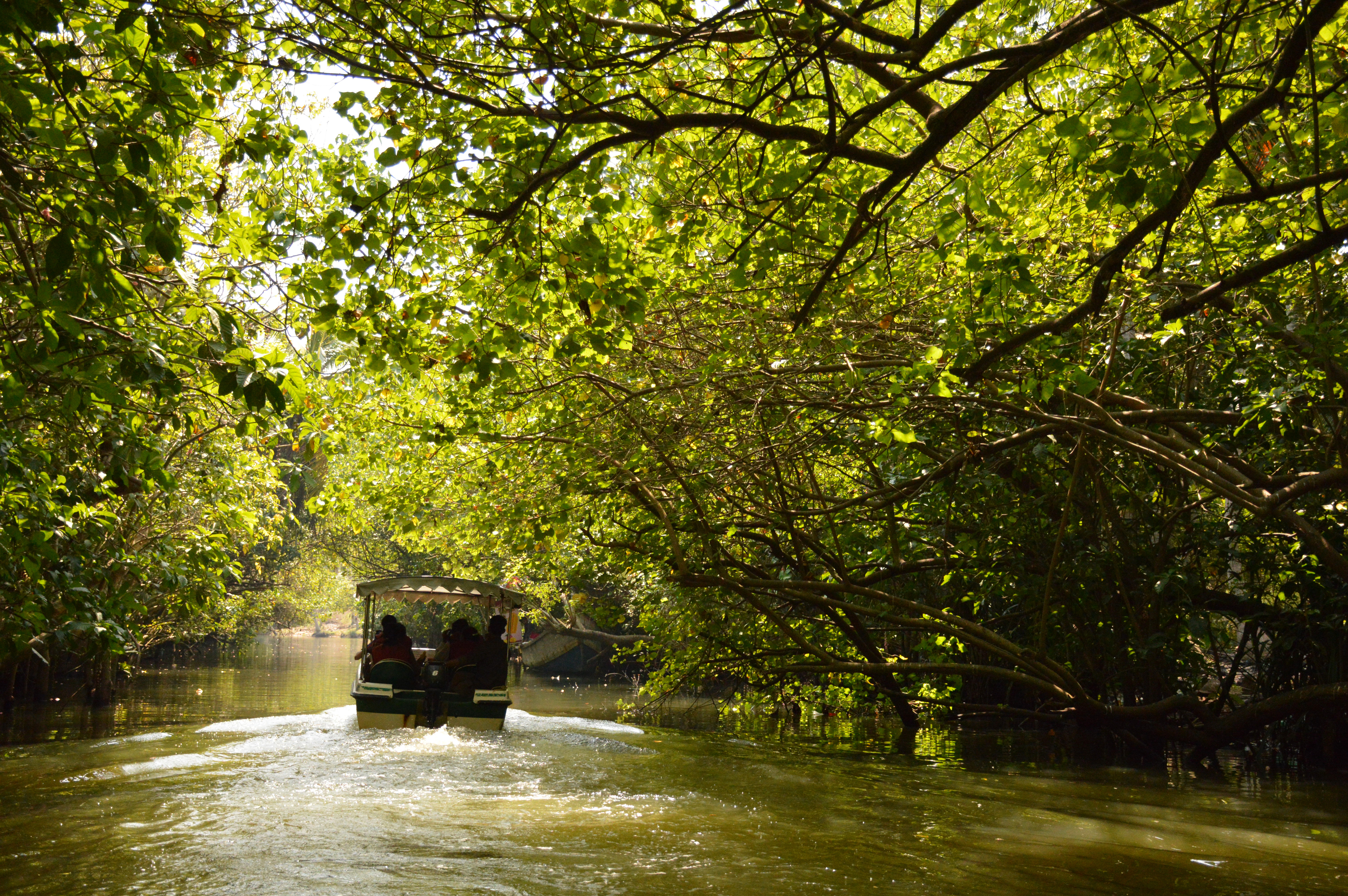
The most memorable Poovar moment is not the shore itself; it is the boat glide through narrow water channels before the beach opens up like a surprise. This is the route travellers talk about long after the holiday ends.
A guide-book style Kerala package for travellers who want more than a ride
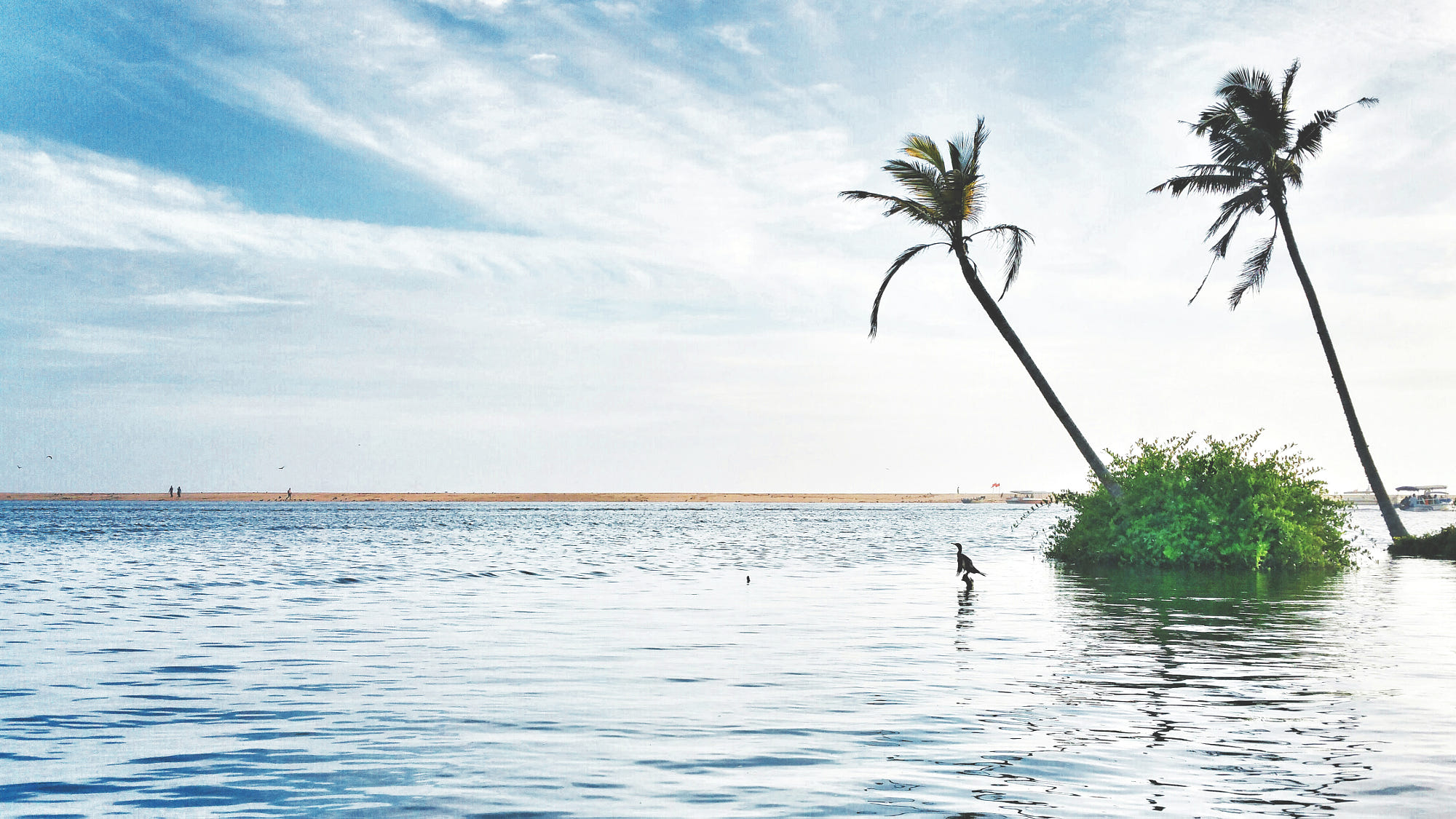
This is the trip where the map becomes a story. At Poovar, the Neyyar River, the backwaters, the Arabian Sea and the golden sand stretch meet in a living estuary. The journey is quiet, but it is never empty: mangroves guard the banks, fishing families read the tides, birds skim the water at dawn, and the beach waits beyond a boat crossing like a secret the coast has chosen to keep.
Most packages will tell you that Poovar is peaceful. That is true, but incomplete. What makes it special is the way the landscape behaves like a living classroom. The river does not simply meet the sea; it negotiates with it. The sandbar moves with the monsoon. Mangroves soften the edges. Boats replace roads in the final stretch. And because of that, you do not merely arrive at Poovar — you learn how coastal life has always been lived here.
Our content is written as a mini guidebook because travellers remember explanation as much as scenery. So this page tells you what you are looking at, why it matters, and how the local rhythm works. You will read the history, the boat logic, the temple route, the food, the folk sense of the coast, and the quiet details most operators skip.
For international guests, Poovar works beautifully as a soft-edged Kerala escape: easy to combine with Thiruvananthapuram, Kovalam, Varkala or a longer backwater holiday. It is ideal when you want one day to feel like a postcard and the next to feel like a lesson in how the sea shapes life.
The estuary is not a static attraction. It changes with tide and season, which is exactly why locals treat it with respect. That living quality is part of the experience.
The most memorable Poovar moment is not the shore itself; it is the boat glide through narrow water channels before the beach opens up like a surprise. This is the route travellers talk about long after the holiday ends.
The mangrove belt is not decoration. It protects the banks, shelters birdlife and signals the health of the estuary. In guidebook terms, it is the quiet architecture of Poovar.
The beach is usually quieter than the better-known coast around it. That silence is the luxury here, and it is best enjoyed with time, not hurry.
Poovar sits at the southern end of Thiruvananthapuram district, where the Neyyar River drains into the Arabian Sea and forms an estuary. During the monsoon, the river carries sand, mud and minerals that continually reshape the meeting point of water and land. That is why Poovar feels alive rather than frozen in time.
The local fishing community adds another layer of meaning. Boats, nets and tide schedules are not tourist props here; they are part of everyday life. The coast has long been part of a wider Kerala seafaring culture where religion, market routes, coast-hugging travel and fishing all shaped the same landscape.
At Poovar, “beautiful” is not just visual. It also means balanced. River, sea, sand and mangrove each have a role, and the package should help people notice that balance.
The boat transfer is not a gimmick. It is the logic of the place. The water channels, sandbars and backwater edges make the journey part of the destination. The beach becomes special because you earn it slowly, the old coastal way.
That slow arrival is precisely why Poovar works so well for a premium, story-led package: the route itself introduces the traveller to the coast before the sand appears.
For international guests, the experience feels both tropical and intimate — less crowded than the headline beaches, more atmospheric than a standard day outing.

This is the heart of the story: the narrow channels, reflections, and the calm backwater stretch that makes you feel as though the coast has slowed down for you. Ideal for a first cruise, birdwatching and a soft sunset return.
Look for kingfishers, Brahminy kites, herons and cormorants. When the light turns low, the water becomes almost copper at the edges — a small detail, but one guests often remember most.
📍 Open in Google MapsAsk for a slower boat section where the guide explains how the sandbar moves with tide and season. This is the kind of explanation that turns sightseeing into understanding.
The beach section feels private because the approach filters out the noise of the road. That makes it a strong choice for couples, families who prefer calm spaces, and any traveller who likes beaches with a sense of discovery.
Most people expect Kerala to be green and wet. Poovar adds a pale-gold beach line to that image, which is why the confluence is such a memorable story in a package page.
📍 Open in Google MapsVisit when the light is still soft. The sand, the river mouth and the sea edge each look different in morning and late afternoon, so timing matters.
To make the package feel like a guidebook, include the nearby cultural edge of the coast. Aazhimala Shiva Temple gives the route a sacred pause, while Vizhinjam adds a historic layer through its rock-cut cave and harbour story.
This combination is powerful in content because it shows Poovar as more than a scenic detour: it becomes part of a wider coastal corridor where worship, trade and fishing have always met.
📍 Open in Google MapsInclude a small explanation of the shore temple visit. Travellers love when a beach package also teaches them why the coast is spiritually meaningful.
The tide is a clock. In a place like Poovar, boat timings are not just logistics. They reflect the wider logic of the coast. Locals think in channels, depth and weather, not just in minutes.
The sand is temporary. The monsoon shapes the estuary every year. That means the landscape is not “missing something” when it looks different; it is simply alive and changing.
The quiet is part of the attraction. Visitors often expect a dramatic beach or a busy marina. Poovar offers something subtler: a pause. That calm is why couples, photographers and reflective travellers fall for it.
Temple and coast share the same route. The shore is not separate from culture. Aazhimala and Vizhinjam show that this coastline has long been both devotional and maritime.
“The Poovar cruise felt like a story unfolding slowly. It was peaceful, but also informative in a way most tours are not.”
“We loved that the package explained the estuary, the fishing culture and the beach access. It felt curated, not generic.”
“It read like a guidebook and travelled like a holiday. The extra cultural stops made the whole coast make sense.”
This single page is designed to feel like a destination guide, a travel brochure and a quiet local story at the same time. It is made to work on desktop, tablet and mobile, with text, image blocks and section rhythm tuned for all screen sizes.