
The Rajasthan Heritage and Temples — India's Land of Kings and Living Legends
Four royal cities. Forts older than most European nations. Desert sunsets that turn the sand gold. One seamless private journey through the most dramatic landscape in India.
Private tour planning
35 Years Operating from New Delhi · Est. 1991
Private journeys from every corner of the world
Language on request · Guide availability confirmed before booking
GST Registered · GSTIN 07AOJPS1151F4ZY

Why Rajasthan Is Unlike Anywhere Else on Earth
Rajasthan means “Land of Kings” — and the title is entirely accurate. For over a thousand years, this region was ruled by warrior clans called Rajputs who built forts so large they could house entire cities, palaces so ornate they rivalled the Mughal court, and stepwells so mathematically precise that modern engineers still marvel at them.
The result is the most concentrated collection of royal architecture anywhere in the world. Jaipur — the Pink City, painted pink for a visiting prince and never repainted otherwise. Jodhpur — the Blue City, where the houses of Brahmin families are painted indigo, a tradition still maintained today. Udaipur — the City of Lakes, where the Lake Palace appears to float on water in the centre of Lake Pichola. Jaisalmer — the Golden City, where the fort is built from honey-coloured sandstone that glows orange in the setting sun.
What makes Rajasthan extraordinary for international visitors is that this is not a museum. The royal families still live in many of these palaces. The artisans who make the jewellery, textiles, and pottery are descendants of the same families who supplied the Mughal emperors. The festivals, the food, and the traditions are unchanged from three centuries ago.
Every Sanoli India Tours Rajasthan journey is entirely private — your own vehicle, your own guide, your own pace. Heritage hotel and palace stays are arranged based on your preference and budget. The tour is designed around what interests you most.
Tour Overview
Request a personalised itinerary and proposal
What You Will See and Experience
The most impressive fort in Rajasthan — a hilltop Rajput palace built in 1592, with the Sheesh Mahal (Hall of Mirrors) inside, a chamber where a single candle illuminates the entire ceiling like a galaxy of stars.
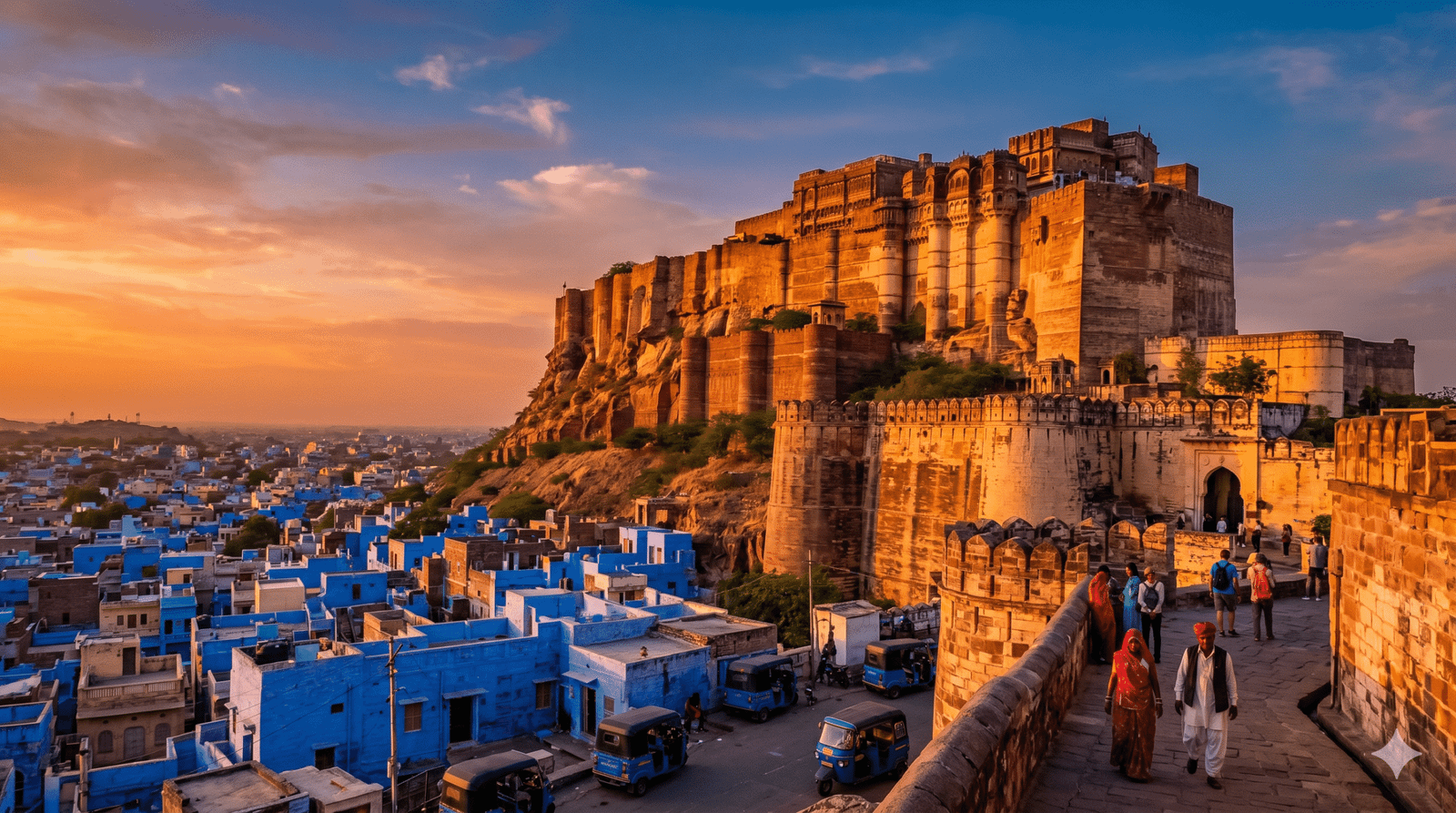
Rising 125 metres above Jodhpur's blue city, Mehrangarh is one of the largest forts ever built. From its ramparts you see the entire city spread below — a sea of indigo houses shimmering in the desert heat.
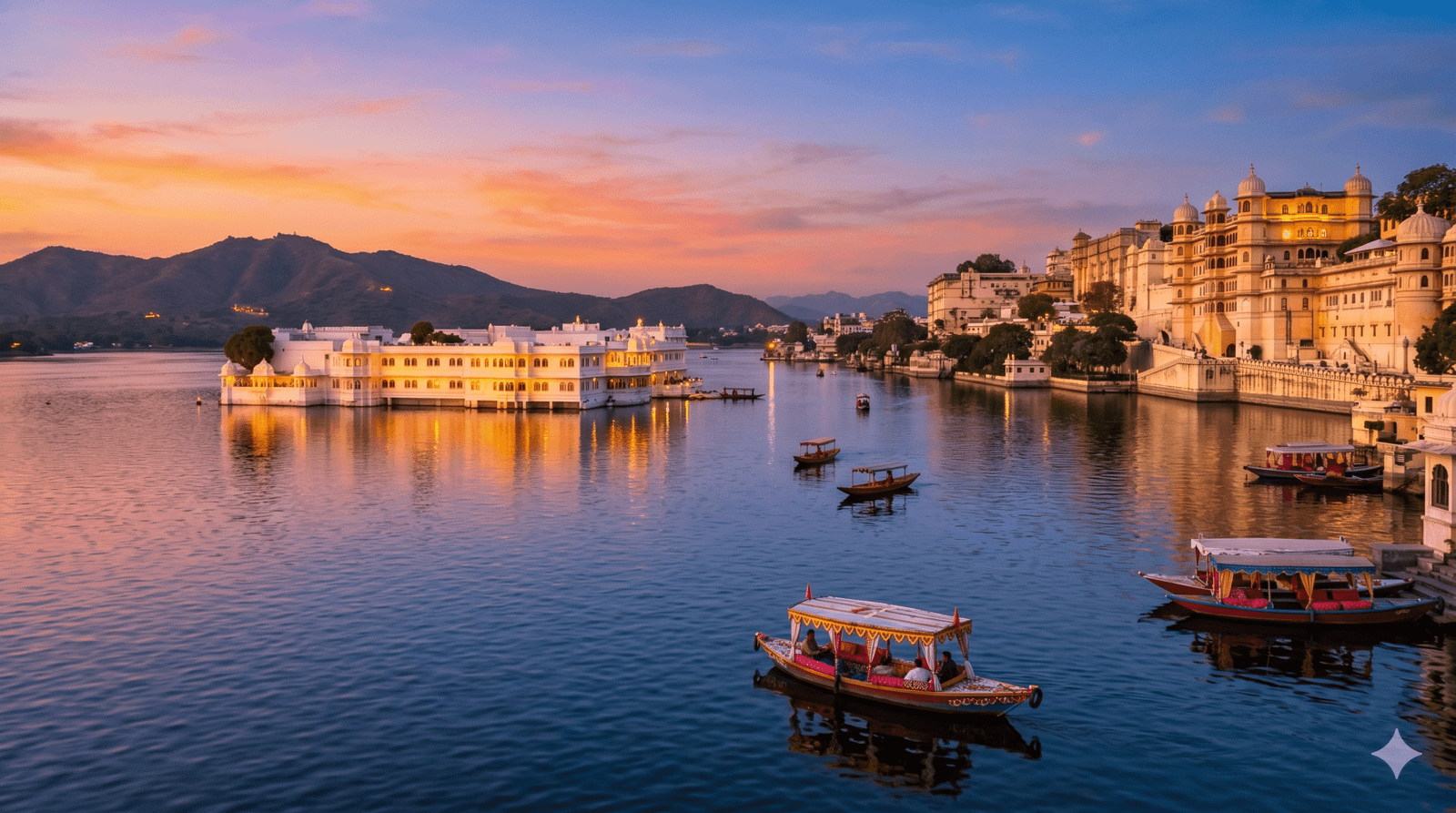
The Lake Palace sits in the middle of Lake Pichola, appearing to float. Built in 1746 as a royal summer retreat, it is now one of the world's most iconic hotels. Even if you don't stay, the boat ride across is unforgettable.
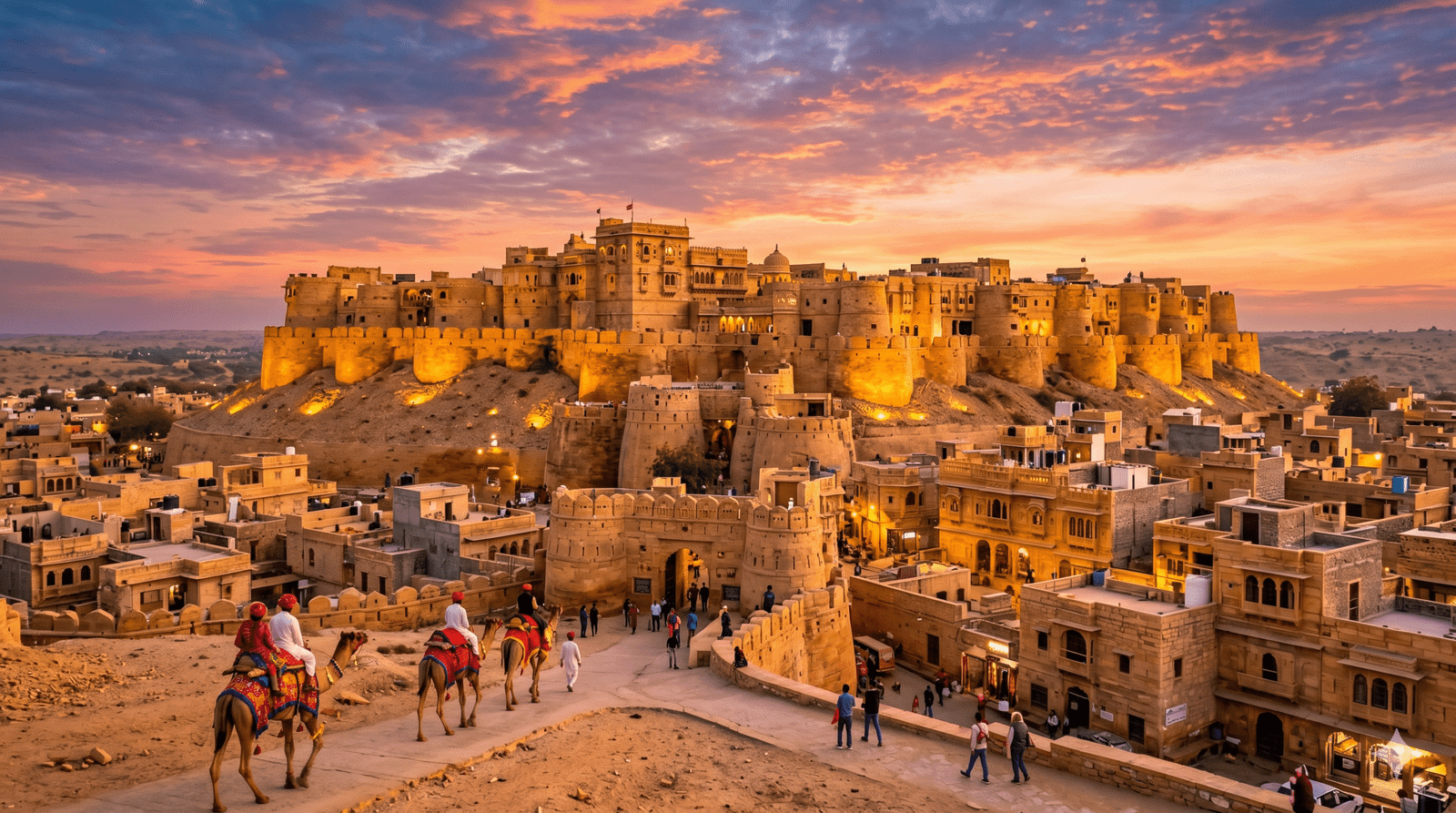
Most forts are empty monuments. Jaisalmer's Golden Fort still has 3,000 people living inside it — families, shops, restaurants, and temples — exactly as they have for 800 years. Walking its lanes at dusk is walking through a living medieval city.
Ride into the Thar Desert at sunset on camelback — the vast silence of the dunes, the sky turning red and orange, and the stars that appear as soon as the sun disappears. Desert camp dinners with folk music and dance are unforgettable.
Kuldhara abandoned village, Kumbhalgarh Fort's 38km wall, Bundi's blue houses and stepwells, Ranakpur's marble Jain temples, and Osian's ancient temple town. Our guides carry the routes that no tour operator shares publicly.
Four Royal Cities. Four Entirely Different Worlds.
Jaipur — Painted Pink for a Prince, Its Living Pink City Heritage
In 1876, when the Prince of Wales arrived in India, Maharaja Ram Singh II ordered the entire walled old city painted pink — the colour of royal welcome in Rajput tradition. He passed a law requiring the colour to be maintained. It has never been repealed. The city remains pink today.
Jaipur's Amber Fort is the finest example of Rajput palace architecture in India — a hilltop complex of courtyards, halls, and the extraordinary Sheesh Mahal where thousands of mirror tiles catch a single candle flame and multiply it into a sea of light. The City Palace is still home to the royal family. The Jantar Mantar observatory (UNESCO) predicted solar eclipses with an error of two seconds, using instruments built entirely from stone in 1728.
Jaipur is also India's gemstone capital. Ninety percent of the world's emeralds pass through the city to be cut and polished — and the same bazaars that supplied Mughal emperors are still open in the same streets.
Samode Palace — 45 minutes north of Jaipur, a 500-year-old palace that most tourists drive straight past on the Jaipur-Agra road. Its painted reception hall — entirely covered in hand-painted floral murals — is one of the finest interiors in Rajasthan. Lunch here is extraordinary.
Jodhpur — The City That Painted Its Houses Blue to Repel Mosquitoes
The blue houses of Jodhpur's old city have a practical origin — the indigo paint mixed with limestone was believed to repel insects and keep houses cool. The tradition started with Brahmin families, who painted their homes to mark their caste. Others followed. Today the entire old city is blue, visible from the fort ramparts above.
Mehrangarh Fort — rising 125 metres from a rocky outcrop above the city — is the most dramatic fort in India. Its walls are so thick that cannon balls fired during the 1807 siege are still embedded in the stone near the main gate, along with the handprints of the queens who committed ritual suicide rather than face capture. These are not tourist embellishments — they are exactly as left.
Jodhpur is also the home of Jodhpuri cuisine — the makhania lassi, pyaaz kachori, and mirchi bada that define Rajasthani street food. The Sardar Market below the clock tower is one of the most atmospheric bazaars in India.
Mandore Gardens — the former capital of Marwar before Jodhpur, just 9 kilometres away. Royal cenotaphs with intricate mythological carvings, a hall of heroes, and virtually no tourists. Most visitors drive straight past it on the way to Jodhpur.
Jaisalmer — A Living Medieval Fort in the Middle of the Thar Desert
Jaisalmer is among the last truly living forts on earth. Built in 1156 from Thar Desert sandstone — the same honey-golden colour as the dunes surrounding it — the fort still has 3,000 people living inside its walls. Families have occupied the same houses for eight generations. The fort glows orange at dusk, gold at noon, and silver under a full moon.
The Patwon Ki Haveli — a row of five ornate merchant mansions built in the 19th century inside the fort — took over 50 years to build and is carved with so much detail that the stone appears to be lace. The Sam Sand Dunes, 45 kilometres from the city, are where camel safaris and desert camp nights are arranged. Sunset there — the sky turning purple and the sand orange, in total silence — is one of the most powerful experiences in India.
Kuldhara Village — an abandoned settlement 18 kilometres from Jaisalmer, deserted overnight in 1825 by 1,500 Paliwal Brahmin families who left rather than pay tribute to a corrupt minister who demanded a young girl. The entire village walked away and cursed it as they left. It has been uninhabited since. The stone houses are perfectly preserved. The silence is extraordinary.
Udaipur — Where Royal Palaces Rise Directly from the Water
Udaipur is considered the most romantic city in India — and the evidence is visible the moment you arrive. The City Palace stretches for 244 metres along the eastern shore of Lake Pichola, its white marble and granite walls rising directly from the water. The Lake Palace appears to float in the centre of the lake. The Monsoon Palace crowns a hill to the west.
Udaipur was founded in 1553 by Maharana Udai Singh II after the fall of Chittorgarh — the capital he could no longer defend. He chose a hidden valley surrounded by the Aravalli Hills, reasoning that an enemy who could not find the city could not attack it. For 400 years the strategy worked. Udaipur was never successfully invaded.
The evening boat ride on Lake Pichola — watching the City Palace and Lake Palace light up as the sun sets — is the single most beautiful hour in Rajasthan.
Ranakpur Jain Temple — 100 kilometres north of Udaipur, deep in the Aravalli hills. Built in 1439, the temple contains 1,444 individually carved marble columns — not one of which is identical. The level of stone carving has never been replicated. Most visitors to Udaipur never make the 2-hour drive. Those who do call it the most beautiful building in Rajasthan.
Your nine-day Rajasthan itinerary
A private nine-day Jaipur–Pushkar–Jodhpur–Udaipur circuit returning to Jaipur. The Udaipur–Jaipur leg is a long travel day; ask about finishing in Udaipur if your onward flights allow.
Day 1 · Arrive in Jaipur
Airport transfer and a relaxed evening. Overnight in Jaipur.
Day 2 · Explore Jaipur
Amber Fort, City Palace, Jantar Mantar and a Hawa Mahal photo stop, subject to your preferred pace. Overnight in Jaipur.
Day 3 · Jaipur to Pushkar
Drive to Pushkar; allow approximately 3–4 hours plus breaks. Explore the lake area and Brahma Temple subject to visitor rules. Overnight in Pushkar.
Day 4 · Pushkar to Jodhpur
Continue to Jodhpur with breaks along the way. Confirm the drive estimate with your quotation. Overnight in Jodhpur.
Day 5 · Explore Jodhpur
Mehrangarh Fort and Jaswant Thada, with time for the old city or an additional museum visit. Overnight in Jodhpur.
Day 6 · Jodhpur to Udaipur
A visit to Ranakpur may be arranged on this leg if agreed in your quote. Allow a full travel day when adding sightseeing stops. Overnight in Udaipur.
Day 7 · Explore Udaipur
City Palace, Jagdish Temple and the lake area. A boat ride can be quoted separately. Overnight in Udaipur.
Day 8 · Udaipur to Jaipur
A long road journey; keep the day for travel and breaks. Overnight in Jaipur.
Day 9 · Depart Jaipur
Transfer to Jaipur Airport according to your flight schedule.
Driving times are estimates. A Ranakpur stop is proposed on the Jodhpur–Udaipur leg and must be agreed in the quotation.
The Royal Cuisine of Rajasthan — Six Things You Must Try
Rajasthani food was designed for a desert climate and a warrior culture — rich, sustaining, and built to last without refrigeration. Your guide will always take you to the authentic local places.
The soul food of Rajasthan — wheat dumplings baked hard in clay ovens, broken open and soaked in spiced lentils, served with sweetened ground wheat. Eaten by Rajput soldiers in the field for 600 years before it appeared in restaurants. Ask your guide for the best local dhaba.
Jodhpur invented this — a deep-fried pastry shell packed with spiced onion filling, eaten in the morning with tamarind chutney. The ones at Janta Sweet Home near the Clock Tower are the finest in Rajasthan.
The signature Rajasthani meat dish — a fiery red mutton curry made with Mathania chillies from Jodhpur. Originally a Rajput hunting camp recipe cooked over wood fires, it is now found in heritage restaurants across Jaipur. The heat is serious. The flavour is extraordinary.
A desert pickle-curry made from dried ker berries and sangri beans — two plants that grow wild in the Thar. Since fresh vegetables don't survive the desert heat, this dish was the vegetable staple of Rajasthani villages for centuries. Still made the same way.
Chickpea flour dumplings simmered in a spiced yoghurt gravy — another desert solution to the lack of fresh vegetables. The yoghurt-based gravy is cooling in the heat and deeply flavoured with Rajasthani spices. Try it at a local thali restaurant with bajra (millet) flatbreads.
Jodhpur's thick, creamy, saffron-and-cardamom-flavoured yoghurt drink — served in clay cups at the Shri Mishtan Bhandar near Sardar Market. The best antidote to Rajasthan's afternoon heat. One cup and you understand why Rajput soldiers carried yoghurt into battle.
The Stories That Live in These Cities
Rajasthan's history is told in stories of extraordinary courage, devotion, and sacrifice. Our guides carry the oral histories that never appear in guidebooks.
Your package quotation: inclusions and exclusions
What can be arranged
Private transfers and sightseeing on the agreed route, accommodation and guides selected for your dates and budget. The exact hotel names, room category, meal plan, guide language, taxes and services are confirmed in the written quotation before payment.
Not included unless stated in your accepted quotation
Flights, visas, travel insurance, personal spending and meals beyond those listed in your quote. Entrance fees, boat rides, cultural shows and optional activities are excluded unless explicitly included in the accepted quotation.
Optional extensions need additional days and a separate quotation.
Questions before booking
Are hotels and prices fixed?
This is a private tour framework. Your quote confirms availability, hotel and room names, currency, payment schedule and cancellation terms.
Can I request a guide in my language?
Tell us your preferred language when enquiring. The quotation will confirm guide availability and any additional cost.
Can the route be adjusted?
Yes. Share your arrival and departure times, interests, budget and preferred pace so we can propose a practical itinerary.
What should I know about temple visits?
Eligibility, dress requirements, opening hours and photography rules vary. Ask for current arrangements and alternatives where entry is restricted.
Is the tour suitable for mobility needs?
Tell us your specific needs before booking. Steps, uneven surfaces, walking distances and vehicle access vary; we will discuss a suitable route and confirm arrangements.
Are flights, insurance and visas included?
These are arranged separately unless expressly listed in your accepted quotation. Optional activities, tickets and extra meals also need written confirmation.
Pair Rajasthan With These

Begin Your Rajasthan Heritage and Temples Journey
Tell us your travel dates, group size, guide language, and which cities interest you most. We will send you a personalised itinerary and proposal after reviewing your request — free, with no obligation.
Ministry of Tourism, Govt. of India — Recognised Tourist Transport Operator · GSTIN 07AOJPS1151F4ZY · Established 1991 · New Delhi