
Golden Triangle
with Temples
A private India tour that blends the classic Delhi–Agra–Jaipur circuit with the living spirituality of Akshardham, Bangla Sahib, Mankameshwar, Birla Mandir, Govind Dev Ji, Galta Ji, and an optional Mathura-Vrindavan extension.
A private journey through monuments and living traditions
This private tour combines Delhi, Agra and Jaipur with temple visits tailored to your interests. It answers the questions international travellers actually ask: what temples are worth seeing, how to join the route smoothly, which days feel most magical, and where the local stories are hiding behind the monuments.
The Golden Triangle gives you the headline icons. The temple layer gives the route its soul. In Delhi, the quiet of Bangla Sahib and the scale of Akshardham create a beautiful contrast. In Agra, the day moves from devotion at Mankameshwar to the moonlit geometry of the Taj. In Jaipur, marble temples, evening aartis and hilltop shrines bring a softer rhythm to the royal city. Add Mathura-Vrindavan and the whole trip becomes a devotional arc as well as a cultural one.
For travellers from the UK, France, Germany, the USA and Australia, this is a comfortable private tour with clear logistics, an easy pace, and enough depth to feel immersive without becoming exhausting.
Explore the official destination pages too: Akshardham in Delhi, Agra on Incredible India, Birla Temple in Jaipur, and Mathura’s sacred corridor.
Quick facts and enquiry box
Plan it in a clean, simple way
Send your dates, nationality, and trip style. Sanoli will shape the route, hotels, and pacing around your comfort, not a one-size-fits-all circuit.
Six stops that give the route its character
Akshardham Temple, Delhi
A grand modern temple experience that feels ceremonial from the first step. Its scale, carvings and calm make it a powerful opening stop for international guests.
Gurudwara Bangla Sahib
A place where devotion and hospitality meet through langar, water, and stillness. It balances the energy of the capital in a way that guests remember long after the trip.
Shri Mankameshwar Temple
One of Agra’s most respected Shiva temples, close enough to sit naturally beside the Taj Mahal on a spiritually balanced itinerary.
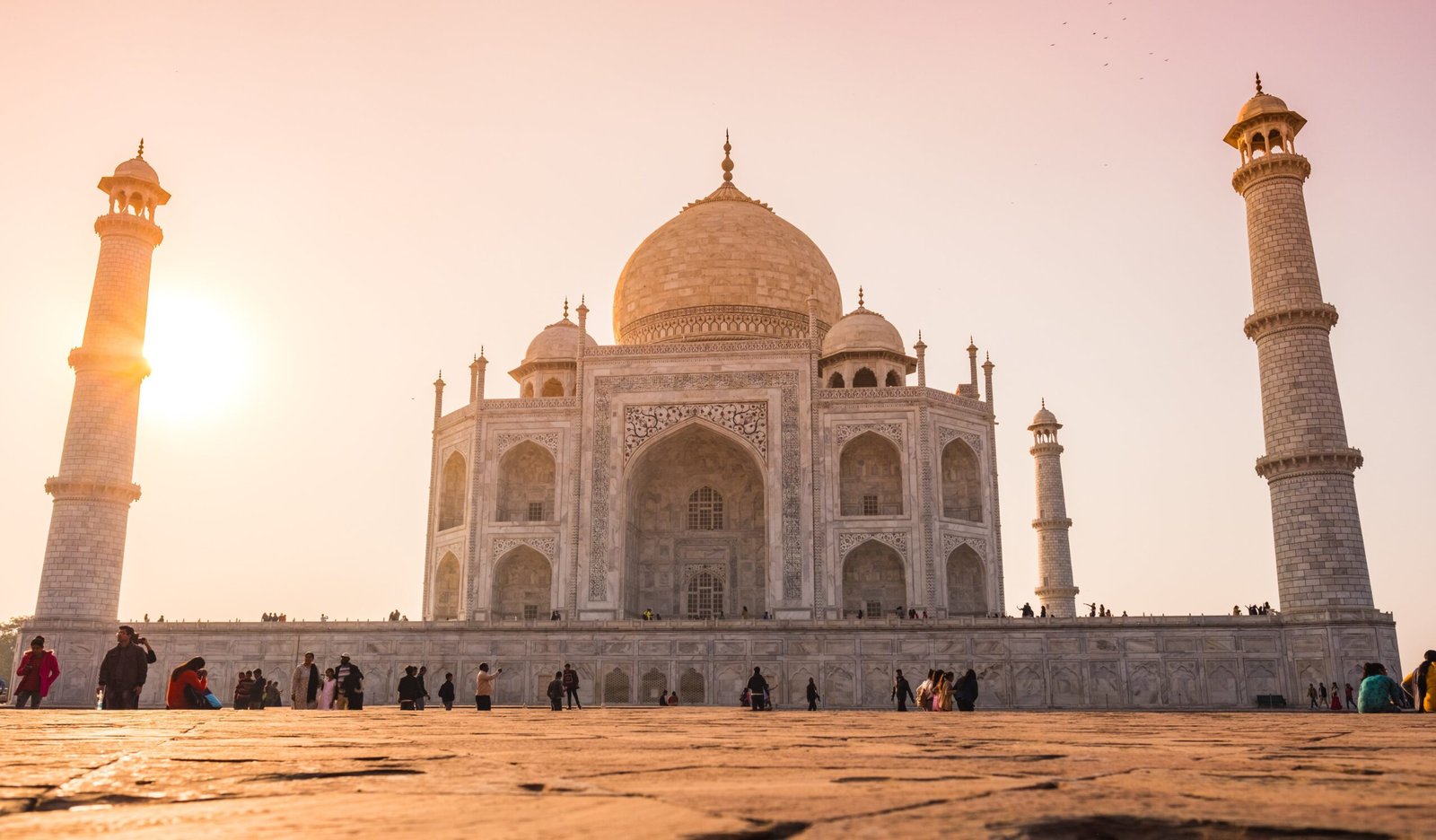
Taj Mahal at sunrise
The emotional centre of the Golden Triangle, best experienced early when the marble changes colour and the gardens feel almost silent.
Birla Mandir, Jaipur
A serene white-marble temple in the Pink City that gives the royal circuit a polished spiritual finish.
Govind Dev Ji and Galta Ji
Two Jaipur experiences that guests rarely combine on their own: temple rhythm in the city centre and a hill-side pilgrimage atmosphere at the edge of the Aravallis.
A city where faith, food, and history all share the same street
Delhi is the most efficient opening chapter for the Golden Triangle with Temples. It gives you old-city intimacy, imperial scale, and a wide range of sacred spaces within a very short drive of each other. That means the day feels full without feeling rushed.
We begin with the calm of Akshardham Temple, continue to the generous community energy of Bangla Sahib, and then move through Old Delhi’s devotional lanes where incense, bells, and street food sit side by side.
The hidden pleasure here is timing. Visit early, and Delhi feels softer, more local, and almost devotional in its rhythm. Late morning turns the same city into something louder and more layered. Both versions are worth seeing.
Sri Digambar Jain Lal Mandir and the bird hospital nearby
A quiet stop near Chandni Chowk where the atmosphere changes completely. It is one of the best places in Delhi to understand how many faiths live within a few streets of one another.
From temple bells to marble dawns, Agra feels deeper when you slow down
Agra is usually sold as one monument. This package treats it as a city of layers. Yes, the Taj Mahal is the visual star, but the spiritual atmosphere grows stronger when you pair it with a temple visit and a quiet heritage walk through the old quarters.
Start the morning at the Taj before the heat arrives. Then step into the devotional side of the city with Agra’s temple circuit — especially Shri Mankameshwar Temple and nearby Sikh heritage spaces. This is where the city stops being just romantic and becomes quietly sacred.
Agra also rewards travellers who enjoy small details: the smell of fresh petha in the market, the sound of shop shutters opening early, and the way the Yamuna changes the light near the monument zone at dusk.
Guru ka Taal and the lesser-seen heritage edge of Agra
A powerful stop for travellers who like pilgrimage, memory, and architecture together. It adds depth to Agra beyond the postcard view.
Pink City temples, marble calm, and hill-side devotion
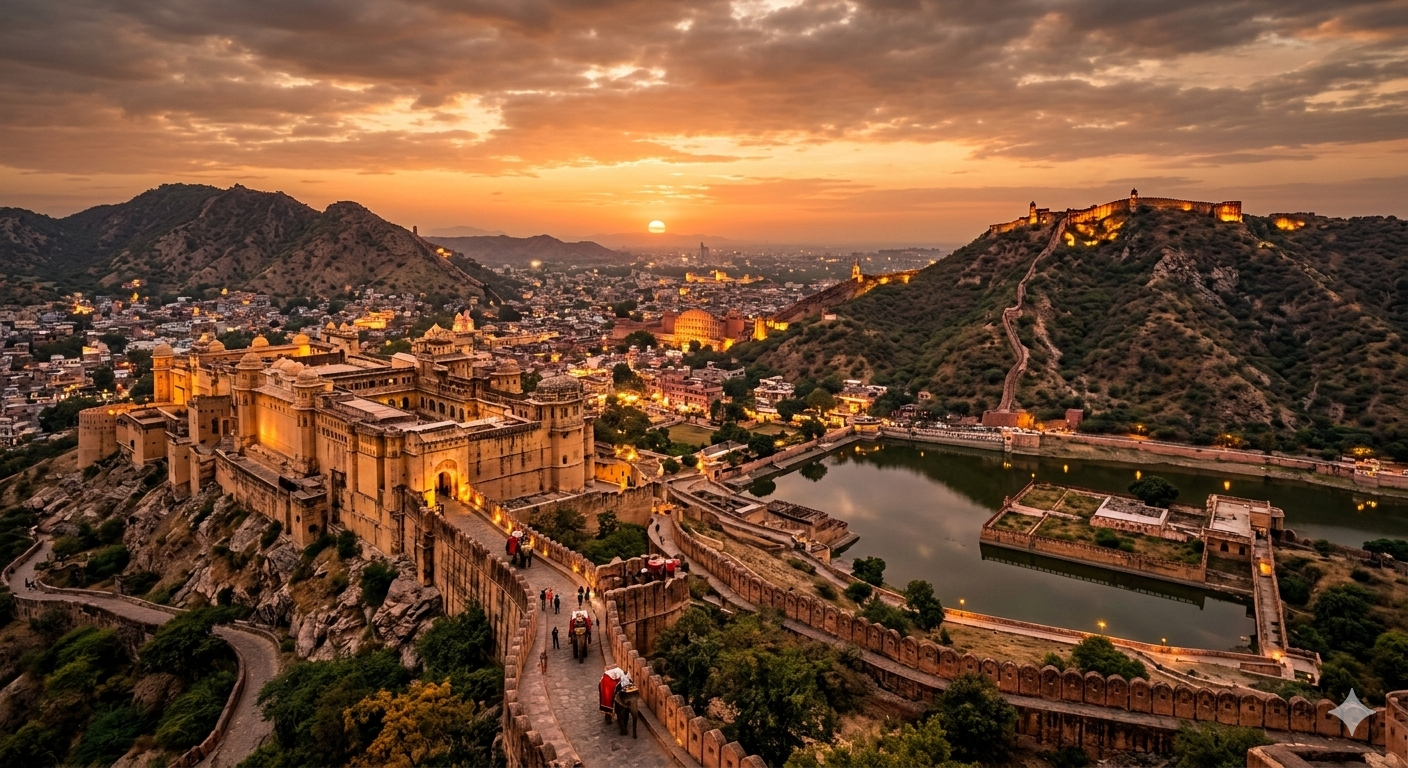
Jaipur balances the grandeur of forts with the softer light of marble temples. That contrast is what makes this section memorable. After the regal energy of Amber, City Palace and Hawa Mahal, the temples bring the trip back to stillness.
Birla Mandir is ideal at dusk. Govind Dev Ji Temple adds a devotional rhythm to the city centre. And Galta Ji brings water, hills and stories together in a way guidebooks often underplay.
For many travellers, Jaipur becomes the emotional finish of the journey: less about one huge monument, more about a sequence of moods that feel handmade and local.
Galta Ji at golden hour
Spring water, Aravalli foothills and a distinctly pilgrim atmosphere. It is one of the best places in Jaipur to feel the city breathe more slowly.
Mathura-Vrindavan turns the Golden Triangle into a sacred circle
If your travellers want a deeper devotional finish, the best extension is Mathura-Vrindavan. It is close enough to fit comfortably, and rich enough to feel like a completely different mood. The tone changes from imperial and urban to devotional and lyrical.
Use this extension for Mathura’s sacred lanes, Prem Mandir, Pagal Baba Temple, and the devotional streets where travellers hear “Radhe Radhe” before they fully understand the place.
This is the best add-on for guests who want more temple time, more vegetarian food, and a more intimate spiritual ending to the trip.
Kusum Sarovar and the calm around it
A quiet place to pause between temple visits. The water, the legends and the softer pace make the region feel deeply human, not only religious.
What the route tastes like when it is done properly
Temple routes work best when the food tells the same story: warm, vegetarian, local, and rooted in each city’s daily life.
Bedmi puri and aloo sabzi
Best eaten early, when the city is still waking up. It is the kind of breakfast that feels grounded, simple and deeply Delhi.
Chole bhature and paranthe
The old lanes taste best when you walk them slowly. These are the foods travellers remember because they are messy, hot, and completely local.
Petha and dalmoth
Agra’s signature petha is not only a souvenir sweet. Paired with dalmoth, it gives the city a sharper, more snackable identity.
Pyaz kachori and ghevar
Jaipur’s food has a celebratory energy even when you are not in festival season. Kachori for the streets, ghevar for the sweet finish.
Mathura peda and makhan mishri
The route feels complete when you taste the sweets of Braj. They are small, warm and intensely tied to local belief and memory.
Lassi, thandai and temple vegetarian thalis
When you want the route to feel gentle, stay with the vegetarian thali, the lassi and the local temple kitchens. It keeps the mood aligned with the journey.
Things guidebooks often miss
Temples and langar create the city’s softest rhythm
In Delhi, the spiritual experience is not only about one monument. It is about the movement between devotion, service, and food. That is why Bangla Sahib matters so much in this route.
The city changes character when you see it before breakfast
Before the traffic and the day tours, Agra feels quieter and more intimate. That is when the Taj and the temple circuit feel closest to the city’s original heartbeat.
Hill temples soften the royal geometry
Jaipur can feel all forts and facades until you step into Galta Ji, where water, hills and local devotion remind you the city has a gentler side too.
“Radhe Radhe” is a greeting, not a performance
In Braj, the devotion is woven into everyday speech. Guests often notice that the region feels less like a monument circuit and more like a lived devotional landscape.
Your seven-day Golden Triangle itinerary
Delhi → Agra → Jaipur → Delhi. Seven days, six nights. Estimated driving times vary with traffic and stops.
Day 1: Arrive in Delhi
Airport transfer and time to settle in. Overnight Delhi.
Day 2: Delhi sightseeing
Choose Old Delhi and New Delhi visits with your guide, including temples if requested. Overnight Delhi.
Day 3: Delhi to Agra
Allow approximately 4–5 hours by road. Schedule Agra Fort and the Taj Mahal around your arrival and opening days. Overnight Agra.
Day 4: Agra to Jaipur
Allow approximately 5–6 hours including a Fatehpur Sikri stop if included in your quotation. Overnight Jaipur.
Day 5: Jaipur sightseeing
Plan Amber Fort, City Palace, Jantar Mantar and a Hawa Mahal viewing stop. Overnight Jaipur.
Day 6: Jaipur to Delhi
Allow approximately 5–6 hours plus breaks and traffic. Overnight Delhi.
Day 7: Depart Delhi
Airport transfer timed to your flight.
The Taj Mahal is closed to tourists on Fridays. Choose dates accordingly and check official visitor information.
Your package quotation: inclusions and exclusions
What can be arranged
Private transfers and sightseeing on the agreed route, accommodation and guides selected for your dates and budget. The exact hotel names, room category, meal plan, guide language, taxes and services are confirmed in the written quotation before payment.
Not included unless stated in your accepted quotation
Monument entrance fees, meals beyond breakfast, optional activities, flights, visas, travel insurance and personal spending. Confirm current entrance fees for your nationality and travel dates.
Optional extensions need additional days and a separate quotation.
Questions before booking
Are hotels and prices fixed?
This is a private tour framework. Your quote confirms availability, hotel and room names, currency, payment schedule and cancellation terms.
Can I request a guide in my language?
Tell us your preferred language when enquiring. The quotation will confirm guide availability and any additional cost.
Can the route be adjusted?
Yes. Share your arrival and departure times, interests, budget and preferred pace so we can propose a practical itinerary.
What should I know about temple visits?
Eligibility, dress requirements, opening hours and photography rules vary. Ask for current arrangements and alternatives where entry is restricted.
Is the tour suitable for mobility needs?
Tell us your specific needs before booking. Steps, uneven surfaces, walking distances and vehicle access vary; we will discuss a suitable route and confirm arrangements.
Are flights, insurance and visas included?
These are arranged separately unless expressly listed in your accepted quotation. Optional activities, tickets and extra meals also need written confirmation.
Three routes that pair well with this one
Let Sanoli turn the Golden Triangle into a sacred story
Send your travel dates, nationality, hotel level and temple preferences. You will receive a thoughtful private itinerary, not a generic brochure reply.
Ministry of Tourism recognised · Since 1991 · GSTIN 07AOJPS1151F4ZY · New Delhi · Private tours · Language on request on request