
Ajanta and Ellora Caves Guide 2026
Ajanta & Ellora: Quick Reference
Ajanta and Ellora are routinely bracketed together as a single day-trip destination near Aurangabad, and just as routinely rushed — which is a mistake. Both are UNESCO World Heritage Sites carved directly into rock, but they represent different eras, different religions, and different artistic priorities. Treating them as one stop instead of two undersells both.
Ajanta vs Ellora: What’s the Actual Difference
Ajanta’s 30 caves are entirely Buddhist, carved between the 2nd century BCE and 6th century CE. Their standout feature is painting — elaborate murals depicting the life of the Buddha and Jataka tales, among the finest surviving ancient paintings anywhere in the world. The caves sit in a horseshoe-shaped gorge above a river, discovered by a British officer in 1819 after centuries of abandonment.
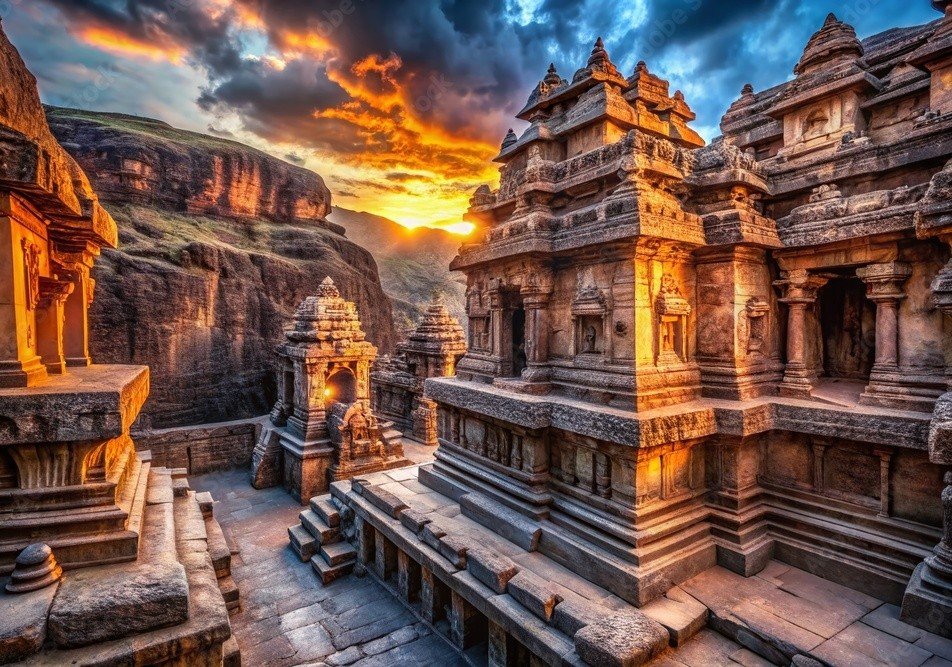
Ellora’s 34 caves are younger, carved between the 6th and 10th centuries CE, and represent three religions side by side — 12 Buddhist, 17 Hindu, and 5 Jain caves, built in that chronological order. Ellora’s signature is sculpture and architecture rather than painting, culminating in the Kailasa Temple: a single, freestanding temple carved top-down out of one solid rock face, removing an estimated 200,000 tonnes of stone without a single structural beam being added.
Which Caves Not to Miss
At Ajanta: Caves 1, 2, 16, 17, and 26 hold the best-preserved work. Cave 1 has the famous Bodhisattva Padmapani painting. Cave 26 has a large reclining Buddha sculpture depicting his final moments before death.
At Ellora: Cave 16, the Kailasa Temple, is the unmissable highlight and can easily absorb an hour alone. Cave 10 (the Vishvakarma cave, with a carved chaitya hall) and Cave 21 (elaborate Hindu sculpture) are worth prioritising if time is short.
Best Time of Day for Photography
At Ellora, arrive as close to opening time as possible — the Kailasa Temple’s carved surfaces catch harsh, flattening shadows once the sun is high. Early morning side-light brings out the depth of the relief carving far better.
At Ajanta, the caves face into a gorge and many rely on ambient light rather than direct sun, so mid-morning tends to give the best natural illumination for the painted interiors. Flash photography is prohibited in most caves to protect the pigments — a steady hand and higher ISO setting matter more than timing your visit around sunlight for the paintings specifically.
How to Get There and Plan Your Visit
Fly into Aurangabad, roughly a 1-hour flight from Mumbai, and the practical base for both sites. Ellora is about 30km away, comfortably visited in half a day. Ajanta is about 100km away, roughly a 2-hour drive, and works best as a separate full-day trip rather than combined with Ellora on the same day — both sites deserve unhurried time, and combining them typically means rushing one or both.
Both sites close on Mondays. Ellora is closed to visitors, but Ajanta remains open on Mondays and closes on other weekdays instead — always confirm current opening days before planning, since exact closure schedules are occasionally revised.
Suggested 2-Day Itinerary
Day 1: Arrive Aurangabad, afternoon at Ellora — Kailasa Temple first while light is best, followed by the Hindu and Jain cave groups.
Day 2: Full day at Ajanta, focusing on Caves 1, 2, 16, 17, and 26, with time built in to sit with the paintings rather than rush past them.
How We Help
Before you travel, check our India visa guide for UK citizens if you’re travelling from the UK, so your visa is sorted before your trip. We build Ajanta and Ellora into wider Maharashtra itineraries with proper time allocated to each site separately, rather than the rushed single-day version most self-planned trips default to. Private transport and a guide familiar with both sites’ histories are included.
Plan Your Ajanta and Ellora Trip
Tell us your travel dates and we will build an itinerary that gives both sites proper time. Ministry of Tourism recognised. Est. 1991.
Frequently Asked Questions
Should I visit Ajanta or Ellora with only one day?
Ellora, for the Kailasa Temple — widely considered the more spectacular single site. With two days, see both.
What is the difference between Ajanta and Ellora?
Ajanta: 30 Buddhist caves, famous for ancient paintings. Ellora: 34 caves across three religions, famous for large-scale rock-cut sculpture including the Kailasa Temple.
Which Ajanta caves should not be missed?
Caves 1, 2, 16, 17, and 26 hold the best-preserved murals and carvings.
Best time of day to photograph the caves?
Early morning for Ellora’s Kailasa Temple; mid-morning for Ajanta’s painted interiors.
How do you get there from Mumbai?
Fly to Aurangabad (~1 hour), then Ellora is 30km away and Ajanta is 100km away.